Effective Organizational Chart for Simplifying Home Cleaning Chores

Keeping a home clean can feel overwhelming, especially when chores pile up and no clear plan exists. A smart way to tackle this challenge is by using an organizational chart that breaks down cleaning tasks into manageable parts. This approach helps distribute chores fairly and keeps the process efficient and stress-free. Here’s how you can create and use an organizational chart to simplify home cleaning.
Why Use an Organizational Chart for Cleaning?
Without a clear system, cleaning chores often get ignored or duplicated. An organizational chart provides a visual plan that shows who is responsible for what and when. This clarity reduces confusion and helps everyone in the household stay accountable. It also makes it easier to spot tasks that need more attention or to adjust responsibilities as needed.
How to Break Down Cleaning Chores
Start by listing all the cleaning tasks in your home. Group them by area or room to keep things organized. For example:
Kitchen: Wiping counters, cleaning appliances, sweeping and mopping floors, emptying trash
Bathrooms: Scrubbing sinks and toilets, cleaning mirrors, mopping floors
Living Areas: Dusting surfaces, vacuuming carpets, organizing clutter
Bedrooms: Changing bed linens, dusting furniture, vacuuming floors
Common Areas: Hallways, entryways, stairs
Breaking chores down this way makes it easier to assign tasks and track progress.
Assigning Tasks Fairly
Once chores are listed, assign them based on each person’s availability, preferences, and abilities. For example, younger children can handle dusting or organizing toys, while adults take on heavier cleaning like vacuuming or scrubbing bathrooms. Rotate tasks regularly to keep things fair and prevent boredom.
Use the organizational chart to clearly show who does what and when. For example, assign kitchen cleaning to one person on Mondays and Fridays, bathroom cleaning to another on Tuesdays and Saturdays, and so on. This schedule keeps chores balanced and predictable.
Using the Chart to Track Progress
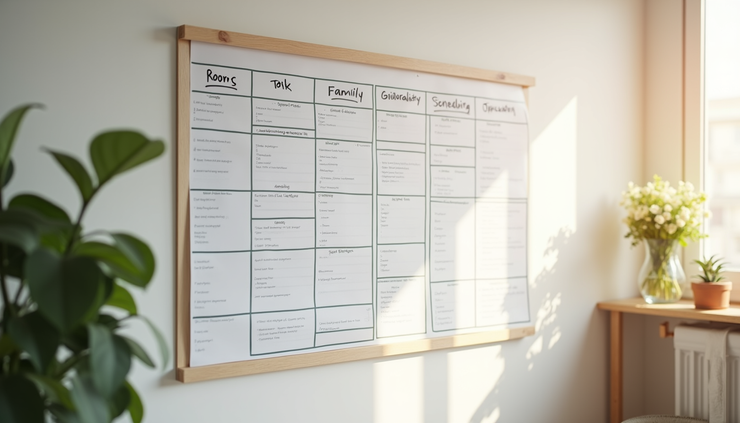
Place the chart somewhere visible, like on the fridge or a hallway wall. Use checkboxes or stickers to mark completed tasks. This visual feedback motivates everyone and helps identify chores that might be falling behind.
You can also create a digital version of the chart using apps or spreadsheets. This allows for easy updates and sharing, especially for busy households with multiple schedules.
Tips for Making the Chart Work
Keep it simple: Avoid overcomplicating the chart. Use clear labels and straightforward task descriptions.
Be flexible: Adjust assignments as needed. Life changes, and so should your cleaning plan.
Include everyone: Even small contributions count. Encourage all household members to participate.
Set realistic goals: Don’t expect perfection. Aim for consistent effort and improvement.
Celebrate progress: Recognize when chores are done well or on time. Positive reinforcement helps build good habits.
Example of a Weekly Cleaning Chart
| Day | Kitchen | Bathroom | Living Area | Bedrooms | Common Areas |
|-----------|-------------------|------------------|------------------|------------------|------------------|
| Monday | Person A | Person B | Person C | Person D | Person E |
| Tuesday | Person B | Person C | Person D | Person E | Person A |
| Wednesday | Person C | Person D | Person E | Person A | Person B |
| Thursday | Person D | Person E | Person A | Person B | Person C |
| Friday | Person E | Person A | Person B | Person C | Person D |
| Saturday | Deep clean kitchen| Deep clean bath | Vacuum & dust | Change linens | Sweep & mop |
| Sunday | Rest or catch-up | Rest or catch-up | Rest or catch-up | Rest or catch-up | Rest or catch-up |
This example shows how chores can rotate, balancing the workload and keeping cleaning manageable.
Benefits Beyond Cleanliness
Using an organizational chart for cleaning chores does more than keep your home tidy. It builds teamwork, teaches responsibility, and reduces stress. When everyone knows their role, cleaning becomes less of a burden and more of a shared activity.
Comments